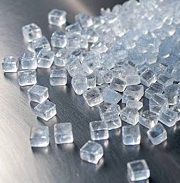
The global polycarbonate market has changed substantially during the last decade. Polycarbonate (PC) remains one of the most important engineering thermoplastics, combining exceptional impact resistance, optical transparency, dimensional stability, heat resistance, electrical insulation and processing flexibility. These characteristics continue to support consumption across electrical and electronics, automotive, construction, healthcare, appliances, telecommunications and other high-performance applications.
Global Polycarbonate Demand Continues to Expand
Current global PC demand is estimated at above 5 million tonnes per year, with annual growth of approximately 2–3%, compared with production capacity estimated at roughly 7.1–7.8 million tonnes per year. The demand is slated to reach around 7.03 million tonnes by 2034, representing average annual growth of about 3.3%. Polycarbonate’s growth increasingly comes from applications where material performance is more important than simply obtaining the lowest-cost plastic.
Electrical and electronic products remain particularly important. Polycarbonate is widely used in housings, connectors, switches, electrical components, telecommunications equipment and consumer electronics because it combines electrical insulation, impact resistance, dimensional stability and flame-retardant capabilities.
The electrical/electronics sector is identified as the leading polycarbonate end-use sector and is expected to remain one of the fastest-growing applications. Automotive and transportation, household appliances, and consumer products are also major demand centers.
Automotive applications are becoming especially attractive as vehicle manufacturers pursue lighter components, increasingly complex lighting systems and electrification. Polycarbonate is already used for headlamp lenses, lighting systems, housings, reflectors, interior components and selected exterior applications. Electric vehicles add further opportunities through battery components, charging infrastructure, displays, sensors and electrical housings.
Asia Now Dominates the Global Polycarbonate Market
One of the clearest differences between today’s market and the polycarbonate industry of a decade ago is the increased importance of Asia. Asia represents approximately 64% of global polycarbonate consumption, while Asia-Pacific accounts for more than half of worldwide production capacity. China, South Korea and Japan remain among the world’s leading producing countries alongside the United States and Germany.
China Is Reshaping Global Polycarbonate Trade
China is no longer simply the world’s most important incremental polycarbonate consumer. Expansion of domestic production capacity is changing international trade flows.
Previously, it was projected that China’s polycarbonate demand could expand by around 3% annually during 2024–2030, compared with extraordinarily rapid average growth during earlier decades. At the same time, additional capacity creates the possibility that China will require substantially fewer imports or could increasingly compete as an exporter when domestic operating rates rise.
This transition is already visible in Europe. In July 2026, European imports of Chinese polycarbonate increased 43% year on year during Q1 2026, despite an overall decline in European PC imports during the same period. Competitive Chinese and South Korean material is putting significant pressure on European producers and prices.
The consequences of global oversupply have already affected European manufacturing. Trinseo previously announced plans to close its virgin polycarbonate production facility in Stade, Germany, pointing to weak demand, high operating costs and pressure from offshore supply.
The central challenge for the polycarbonate industry is therefore shifting from building enough capacity to satisfy demand toward achieving adequate utilization and margins in a market where production capability considerably exceeds consumption.
BPA Regulation Has Become More Important for Polycarbonate
The regulatory picture surrounding bisphenol A (BPA) has also developed significantly. In December 2024, the European Commission adopted Regulation (EU) 2024/3190, prohibiting BPA in specified food-contact materials. The regulation explicitly covers plastics and therefore affects BPA-based polycarbonate used in relevant food- and beverage-contact applications, including reusable drink bottles, water-distribution equipment and kitchenware.
The normal transitional period allowing non-compliant single- and repeat-use food-contact articles manufactured under the previous rules to be placed on the EU market ran until 20 July 2026. Certain specialized applications receive longer transition periods, including some professional food-production equipment.
This does not mean a general European ban on polycarbonate. Automotive components, electronics, electrical products, glazing, construction materials, medical applications and numerous other non-food-contact applications remain major markets. Nevertheless, the rules accelerate substitution toward BPA-free materials in food-contact applications and make regulatory compliance an increasingly important factor in material selection.
Polycarbonate Overcapacity Is Becoming a Structural Market Issue
Global capacity expansion has moved ahead of demand growth. Worldwide polycarbonate capacity was estimated at approximately 7.85 million tonnes per year in 2023, and previously identified potential expansion toward 9.95 million tonnes by 2028, with prospective capacity additions concentrated in Asia. At the same time, continuing overcapacity is registered in the market, and major new construction and expansion activities are becoming more limited. This combination is important. Slower capacity additions do not immediately eliminate oversupply because existing assets still provide considerably more potential output than the market currently consumes. The gap helps explain pressure on operating rates, aggressive export competition, and the strategic shift toward differentiated polycarbonate grades rather than commodity resin alone.
Specialty Polycarbonate Is Becoming More Important
Major manufacturers are increasingly targeting higher-value materials capable of meeting demanding specifications in healthcare, electronics, mobility, and energy infrastructure.
Covestro, for example, commissioned a new industrial-scale polycarbonate copolymer facility in Antwerp in 2024. The plant uses a solvent-free melt process and enables polycarbonate materials with adjustable characteristics for applications including electrical/electronics and healthcare.
Potential growth fields extend into telecommunications equipment, photovoltaic systems, residential energy-storage housings, charging stations and wall boxes, where electrical insulation, flame retardancy, durability and weather resistance are essential.
This evolution is strategically important. In an oversupplied commodity market, producers can create more defensible margins through specialty copolymers, PC blends, flame-retardant grades, optical materials, healthcare polymers and application-specific compounds.
Recycled and Lower-Carbon Polycarbonate Gains Commercial Momentum
Circularity has moved from a long-term sustainability concept to an active product-development strategy. Mechanical recycling is increasingly being applied to waste streams such as large polycarbonate water bottles, construction sheets and end-of-life automotive headlamps. Covestro has stated that it aims to supply more than 60,000 tonnes of recycled-content polycarbonates annually in Asia-Pacific in 2026, with facilities capable of scaling beyond 100,000 tonnes of mechanical recycling capacity as demand develops.
Chemical recycling and mass-balance approaches are developing alongside mechanical recycling. These technologies are particularly relevant when manufacturers need recycled feedstocks while preserving demanding optical, mechanical or processing characteristics.
Such developments could become a significant competitive differentiator as electronics manufacturers, vehicle producers and other industrial customers tighten requirements for recycled content and product carbon footprints.
Final Thoughts
Polycarbonate’s combination of transparency, toughness, heat resistance, electrical properties and design flexibility remains difficult to replicate. The strongest growth opportunities in the coming years are increasingly likely to come not from traditional commodity applications, but from advanced electronics, electric mobility, energy infrastructure, specialty copolymers and circular polycarbonate grades.
The result is a market undergoing a fundamental transition: polycarbonate demand continues to grow, but future profitability will increasingly depend on specialization, regional competitiveness, regulatory adaptation and circular-material technologies rather than volume expansion alone.
Follow this page to find in-demand research reports covering the polycarbonate market globally and in different countries.