The global zirconium market in 2026 is shaped by a very different economic environment from the one seen a decade ago. Construction activity and ceramics remain fundamental demand drivers for zircon, but the industry is increasingly influenced by Chinese property-sector weakness, changing mineral-sands supply, nuclear power investment, advanced ceramics, and persistent geopolitical uncertainty.
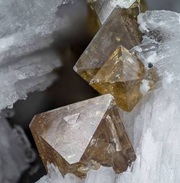
Zirconium is primarily obtained from zircon (zirconium silicate, ZrSiO₄) recovered from heavy mineral sands. The mineral is converted into zirconia, zirconium chemicals and zirconium metal for applications ranging from ceramic tiles and refractory products to nuclear fuel cladding, electronics and specialty materials.
Global Zircon Supply Tightened After Stronger 2024 Production
Global mine production of zirconium mineral concentrates increased by approximately 4% in 2024 to an estimated 1.5 million tonnes gross weight, according to the U.S. Geological Survey. Australia and South Africa remained the leading global exporters, while China was the largest importer of zirconium mineral concentrates.
The situation changed in 2025. The USGS 2026 assessment indicates that global zirconium mineral-concentrate production declined by approximately 12% year-on-year, highlighting how quickly the supply side can respond to weaker demand and changing mineral-sands economics.
This tightening does not automatically translate into higher zircon prices. Demand conditions, inventories, competition between suppliers, and the availability of lower-grade concentrates all influence realized prices.
China’s Property Market Remains Critical for Zircon Demand
Ceramics continue to dominate zircon consumption. More than half of zircon is used in ceramic production, particularly floor and wall tiles, sanitaryware, and related products, where zircon provides whiteness, opacity, chemical resistance and durability.
That makes China’s construction and real-estate cycle especially important for the zirconium market.
Iluka Resources reported that zircon demand from ceramics was affected by continued weakness in the Chinese property sector during 2025. Conditions were stronger in Europe and India, while Chinese fused-zirconia prices weakened amid elevated inventories and subdued market sentiment.
The macroeconomic picture remains challenging in 2026. The IMF’s July 2026 outlook projects Chinese real GDP growth of 4.6% in 2026, with structural headwinds and uncertainty continuing to affect activity.
For zircon producers, this matters because slower property development can reduce tile production and, therefore, zircon flour and opacifier consumption. Renovation activity, infrastructure investment and stronger construction markets in India and other emerging economies can partly compensate, but China remains too large to ignore.
Zircon Prices Face Pressure Despite Resilient Sales
Recent results from Iluka Resources illustrate the complex balance between volumes and prices. The company sold 268,000 tonnes of zircon products in 2025, including zircon-in-concentrate, representing an increase of 16% from 2024. Premium and standard zircon sand achieved a weighted-average realized price of USD 1,643 per tonne for the year. By the fourth quarter, the average realized price had fallen to approximately USD 1,502 per tonne amid softer Chinese pricing and aggressive competitive discounting. Iluka’s 2025 production also increased to approximately 270,300 tonnes of zircon, compared with 227,200 tonnes in 2024.
The data illustrate an important feature of the current zircon market: higher sales volumes do not necessarily imply stronger pricing. Customers have increasingly sought lower-cost material, inventories have been carefully managed, and producers remain exposed to aggressive competition.
Iluka entered 2026 with production settings designed for what it described as a period of moderate mineral-sands demand. Its outlook identified stronger Northern Hemisphere housing activity, improvement in China’s economy and possible supply disruptions as potential catalysts for better market conditions.
Nuclear Power Strengthens the Strategic Importance of Zirconium
Zirconium demand cannot be assessed through ceramics alone. High-purity zirconium metal has a crucial role in the nuclear energy industry, because of its corrosion resistance and exceptionally low neutron absorption. In most light-water reactors, uranium oxide fuel pellets are contained in zirconium-alloy tubes that form nuclear fuel rods.
A typical large pressurized-water or boiling-water reactor fuel assembly can incorporate substantial quantities of zirconium alloy. World Nuclear Association notes that roughly 100 kilograms of zircaloy can be involved in a typical fuel assembly, depending on reactor design. Nuclear-grade zirconium must also be separated from hafnium because hafnium strongly absorbs neutrons. This creates a specialized zirconium value chain quite different from the market for zircon used in tiles.
As countries extend existing reactor lifetimes, build new nuclear generating capacity and develop next-generation reactor technologies, demand for highly purified zirconium alloys should remain strategically significant. The emergence of accident-tolerant fuel systems is also stimulating further research into improved zirconium-based cladding materials.
Advanced Ceramics and Zirconia Create Higher-Value Opportunities
Another important transformation is the expanding role of zirconium dioxide, or zirconia, in technically demanding markets. Stabilized zirconia offers high fracture toughness, wear resistance, thermal stability and chemical resistance. These characteristics support its use in advanced ceramics, dental materials, oxygen sensors, thermal-barrier systems, grinding media and precision industrial components.
This means that future zirconium market growth will increasingly depend on the balance between traditional bulk zircon consumption and higher-value downstream applications. Producers capable of supplying purified chemicals, specialized zirconia grades, and nuclear-quality material participate in markets with very different economics from conventional ceramic zircon.
Economic Growth Will Continue to Determine the Zirconium Market Outlook
The world economy nevertheless remains a decisive variable. The World Bank projects global economic growth of approximately 2.5% in 2026, down from 2.9% in 2025, amid elevated energy costs, geopolitical tensions and policy uncertainty. Those conditions directly affect construction, housing investment, industrial production and inventory decisions – all important components of zircon demand.
Chinese construction and ceramic manufacturing continue to exert considerable influence on zircon consumption and pricing. Weak property activity can suppress demand even when supply is tightening. At the same time, India’s expanding ceramics industry, European renovation demand and advanced zirconia applications provide additional sources of consumption.
On the supply side, zircon remains geographically concentrated and largely dependent on mineral-sands operations. Producers therefore have to balance output against market conditions rather than pursue maximum production regardless of demand.
Most importantly, zirconium is increasingly a strategic material rather than merely a ceramic raw material. Its essential role in nuclear fuel systems, corrosion-resistant equipment and advanced ceramics gives the industry a second growth axis that is less directly tied to traditional construction cycles.
The near-term zircon market may therefore remain price-sensitive as producers contend with cautious purchasing, Chinese economic uncertainty and competitive supply. Over the longer term, however, nuclear energy expansion, advanced materials, specialized zirconia products and supply-chain security should reinforce zirconium’s importance in the global materials economy.
The defining feature of the zirconium market today is no longer simply whether the construction sector is growing. It is the interaction between traditional ceramics demand, constrained mineral-sands supply, China’s economic trajectory and rising demand for high-performance zirconium materials.
Find a detailed analysis of the zirconium market in the in-demand research report “Zirconium Concentrates: 2026 World Market Review and Forecast to 2035“.