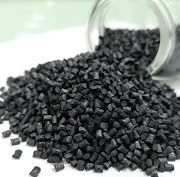
The polyphenylene sulphide (PPS) market has changed substantially in recent years. Once concentrated primarily in demanding automotive, electrical, and industrial applications, PPS is benefiting from structural demand generated by vehicle electrification, power electronics, semiconductor equipment, and advanced thermal-management systems.
Recent estimates value the global PPS market at approximately USD 1.8–1.84 billion in the year 2025, with the market approaching USD 2 billion in 2026. Asia-Pacific remains the industry’s largest regional market, supported by its concentration of automotive, electronics, and polymer manufacturing.
The physical scale of the industry has expanded considerably. Recent industry estimates put the global PPS consumption at over 220,000 tonnes per year. Growth is supported primarily by the escalating demand for reinforced PPS compounds to replace metals and lower-performance polymers in demanding environments.
Electric Vehicles Become a Major PPS Growth Driver
The automotive industry remains one of the largest PPS end users, accounting for an estimated 34.4% of the global market revenue in 2025. Electrification is expanding the polymer’s addressable market beyond conventional under-the-hood components. PPS is increasingly used in EV battery thermal-management systems, high-voltage connectors, sensors, pumps, power electronics, and coolant-handling components. The material is particularly attractive where manufacturers require electrical insulation, chemical and hydrolysis resistance, dimensional stability, and lower component weight.
Asian PPS Capacity Continues to Expand
Asia stands at the center of global PPS production and consumption. In late 2025, Toray Advanced Materials Korea completed a 5,000-tonne-per-year expansion of its PPS production facilities in Gunsan, South Korea, increasing capacity at the site to 13,600 tonnes annually. The company also expanded sodium hydrosulfide production by 4,800 tonnes per year, strengthening vertical integration and raw-material security. These investments reflect expectations of continued demand growth from automotive electrification and electrical and electronic applications.
PPS Prices Reveal Significant Regional Differences
PPS remains a regionally fragmented specialty-polymer market. Indicative September 2025 prices ranged from approximately USD 5,140 per tonne in South Korea to USD 11,250 per tonne in the United States. Japan stood at around USD 9,450 per tonne, Germany at USD 8,710 and Belgium at USD 7,950. Such differences reflect regional supply conditions, production costs, specifications and downstream demand.
Recycled PPS Moves Toward Commercialization
Sustainability is becoming another competitive factor. Recycling PPS has historically been difficult because commercial compounds frequently contain significant quantities of glass fiber and other additives. This is changing. Manufacturers are developing mechanically recycled glass-fiber-reinforced PPS, while recent research has demonstrated chemical recycling and upcycling routes for commercial PPS resins and composite waste.
Polyphenylene Sulphide Market Outlook
The PPS market is evolving from a relatively small specialty-resin segment into an increasingly strategic part of the advanced engineering plastics industry. Consumption now exceeds 220,000 tonnes annually, Asian capacity continues to expand, and electrification is opening new high-value applications.
Future competition will increasingly center on EV thermal management, high-voltage electronics, semiconductor applications, specialized reinforced compounds and recycled PPS. Producers capable of combining high-temperature performance with application-specific formulations, reliable supply, and improved sustainability are positioned to benefit most from the next stage of market development.
Find a detailed analysis of the global polyphenylene sulphide market performance, trends, and prospects in the in-demand research report “Polyphenylene Sulphide (PPS) 2026 Global Market Review and Forecast to 2035“.