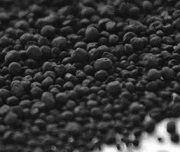
The global carbon black market is experiencing an increasingly uneven demand environment in 2026. Tire and rubber applications continue to account for the majority of consumption, but regional manufacturing shifts, weaker industrial activity in several Western markets, and expanding Asian capacity are changing established supply patterns. At the same time, tire manufacturers are accelerating their use of circular and recovered carbon materials, creating a new competitive dimension for conventional carbon black producers.
Tire Production Remains the Main Carbon Black Demand Driver
Carbon black is primarily used as a reinforcing filler in tires, where it improves abrasion resistance, durability, and mechanical strength. Consequently, changes in tire manufacturing directly impact carbon black consumption.
Recent producer results illustrate the regional divergence. Orion reported that its rubber carbon black volumes increased by 4% in 2025, reaching approximately 714,800 tonnes. However, demand was weaker in Europe and parts of the Americas as Western tire manufacturers faced historically high levels of imported lower-tier tires and relatively soft freight activity.
Cabot similarly notes that replacement-tire demand remains comparatively resilient, while increasing tire exports from Asia have reduced carbon black demand associated with local tire production in Western Europe and the Americas.
Asian Carbon Black Capacity Continues to Expand
Despite softer conditions in some developed markets, investment continues in regions where tire and rubber manufacturing is expanding.
Cabot completed an expansion at its Cilegon facility in Indonesia during 2025, adding around 80,000 tonnes per year of reinforcing-carbon capacity. Birla Carbon is also bringing additional production facilities online in India and Thailand during 2026, strengthening its supply position across rapidly growing Asian tire and mechanical-rubber markets.
This capacity shift reflects the increasing importance of Asia as both a tire-production hub and an exporter of finished rubber products.
Circular Carbon Black Moves Closer to Commercial Scale
One of the most important technological developments is the transition from entirely fossil-based carbon black toward circular and recovered carbon products.
In June 2026, Orion began producing circular carbon black at its ISCC PLUS-certified Qingdao plant in China using tire pyrolysis oil as a feedstock. The company is manufacturing grades suitable for tires and mechanical rubber goods, demonstrating that circular feedstocks are moving into mainstream carbon black production.
Recovered carbon black produced directly from end-of-life tire pyrolysis is developing in parallel. Recent research confirms that rCB can partially replace conventional carbon black in rubber compounds, although ash content, surface chemistry, and consistency remain important technical limitations. Activation and demineralisation technologies are therefore receiving increased attention.
Feedstock Economics Remain Critical
Conventional carbon black production relies heavily on residual aromatic oils from petroleum refining and coal-tar processing. Oil prices therefore influence production costs and selling prices. Orion reported that lower oil prices contributed to declining carbon black sales values during 2025 even where physical rubber-carbon-black volumes increased.
Carbon Black Market Outlook
The carbon black market outlook remains closely tied to tire manufacturing, but its structure is changing. Asian production growth, pressure on Western manufacturing, and increasingly demanding sustainability targets are reshaping investment decisions.
Conventional carbon black will remain essential for high-performance rubber applications, yet future competitiveness will increasingly depend on energy efficiency, feedstock flexibility, lower carbon intensity, and the ability to incorporate recycled raw materials. Circular carbon black and recovered carbon black are therefore likely to become progressively more important components of the industry’s long-term growth strategy.
More reliable information on the carbon black market can be found in the topical research study “Carbon Black (BC): 2026 World Market Outlook and Forecast up to 2035”.