
Vinyl acetate monomer (VAM) is a building block for products with very different demand cycles. It becomes polyvinyl acetate for adhesives and coatings, polyvinyl alcohol for films, and ethylene-vinyl acetate (EVA) for products ranging from foams to solar-panel components. Construction activity, packaging choices, and solar manufacturing all matter to VAM buyers. MCGroup’s 2026 outlook projects 4.5% average annual market growth, with Asia Pacific leading consumption.
Adhesives and Coatings Remain the Core VAM Demand Drivers
Polyvinyl acetate is VAM’s largest downstream market. Its emulsions are widely used in adhesives, while vinyl acetate-based dispersions serve coatings and construction materials. MCGroup’s derivatives outlook projects 3.5–4% annual growth for polyvinyl acetate, with Asia Pacific expanding faster than Europe and North America. Renovation also supports demand: tile adhesives, surface coatings and other building products are used when existing properties are upgraded.
Other VAM derivatives reach different customers. Polyvinyl alcohol supports water-soluble films; EVA is used in foams, films and solar modules; and ethylene-vinyl alcohol provides an oxygen barrier in food packaging. Growth in solar encapsulants therefore does not necessarily translate into equally strong orders for conventional construction adhesives.
European VAM Prices Show the Depth of the Reset
A five-year European price series in Wacker’s annual report shows how far VAM prices moved after the 2021–22 shortage. The reported annual average fell from EUR 1,058 per tonne in 2024 to EUR 927 in 2025, a decline of about 12%. Wacker attributed softer prices for vinyl acetate, acetic acid and ethylene to weak demand. These figures are European annual averages, rather than global prices or 2026 spot quotations.
European VAM prices fell after the 2021–22 peak (annual average price, euros per tonne)
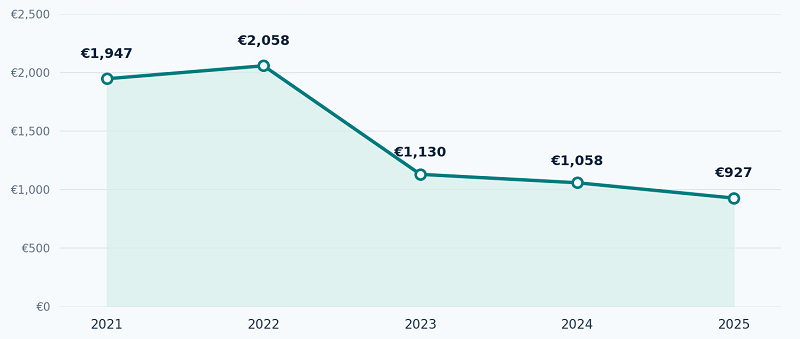
Source: Wacker Annual Report 2025, using ICIS price data.
Feedstock Costs and Plant Restarts Shape 2026 Supply
VAM production depends on ethylene and acetic acid, so changes in either feedstock can affect production economics. Individual plants also matter to regional availability: Celanese reported restarting its Frankfurt VAM unit during the second quarter of 2026. In September, the company announced VAM price increases of EUR 100 per tonne in EMEA and USD 150 per tonne in Mexico and South America, subject to contracts. Those increases describe one supplier’s pricing decision; completed transactions determine market prices.
VAM Market Outlook: Follow the Derivatives
Through the rest of 2026, construction-related binder orders, EVA demand from solar manufacturing, feedstock costs and plant operating rates will offer the clearest signals. Packaging and specialty films may broaden demand over time, while purchasing conditions will continue to differ across polymer chains.
For production, consumption, trade, and price details and forecasts by country, see Vinyl Acetate (VAM): 2026 World Market Outlook and Forecast up to 2035.